The recently launched AI Resist List marks an important milestone. By documenting instances of resistance to harmful AI systems and practices around the world, it makes one thing clear: people are actively challenging how AI is built and deployed, in courtrooms, workplaces, and neighbourhoods, from Japan to Congo to Brazil.
But documenting resistance raises an equally important question: what happens after people push back?
Steering AI toward futures that people actually want depends not only on whether resistance emerges, but also on how the organizations developing and deploying these systems respond. If we want to strengthen future efforts to contest and change harmful algorithmic systems, we need to understand the strategies institutions use to absorb, deflect, or neutralize resistance.
Our work, presented at the ACM FAccT in June, addresses this question through an in-depth analysis of 43 real-world cases in which algorithmic systems were publicly contested. Across these cases, we found recurring ways organisations respond to criticism.
We call this an “institutional playbook”: a set of tactics that can help organisations deflect scrutiny, protect their reputation and keep their AI systems running. Recognising them can help people understand what they are up against.
The playbook institutions use to avoid accountability
- Deny harm and responsibility: The most blatant move is outright denial. Those who build and deploy these systems distance themselves from what they made, either rejecting that any harm occurred or arguing it was someone else’s fault. Air Canada, sued over a chatbot that misled a customer, argued the bot was a “separate legal entity” responsible for its own actions.
- Justify the algorithm: Sometimes they accept both the harm and their role in it, but insist the system is still the right tool for the job. They frame the algorithm around its benefits, usually efficiency and cost, and cast it as more objective than the humans it replaced, keeping the debate on the system’s merits rather than its harms.
- Restrict contestation: They shield themselves by narrowing who can challenge them and how. This ranges from invoking legal exemptions to locking non-contestability and non-boycott clauses into procurement contracts, which can leave even employee protest with nowhere to land.
- Avoid scrutiny through opacity: The details needed to understand a harm are kept out of reach. Technical specifications are withheld as trade secrets, and the people closest to the system are often bound by non-disclosure agreements, so the evidence required to contest never surfaces.
- Strategic concession and delay: The most devious tactic, because it looks like cooperation. They use time against you: conceding just enough to ease the pressure while leaving the system intact, fixing individual cases but resisting audits, appealing fines while carrying on, and stretching promised reforms out for years.
So what can make a challenge more effective?
What tactic gets employed and whether or not any of them prove fruitful is contingent on a set of key influencing factors which also inform us as to how contestation efforts might best move forward in the future:
How is the fight framed? Those in power frame their systems around the good they claim to do, efficiency and saved costs, while ignoring the harm. The strongest counter is to center due process and procedural rights, keeping the debate on people’s rights rather than the system’s technical merits.
Can we prove the harm, and pin down who caused it? Denying harms and responsibility become difficult when cases are well-documented and traceable to a specific actor. Clear attribution lets people aim their demands at someone.
Are people acting together? One complaint is easy to dismiss; a coalition is not. When affected people, advocates, and others join forces, they raise the visibility and the reputational cost of doing nothing. That shifts the cost-benefit calculation for those in power and can make change the cheaper option, especially when a workable alternative already exists.
Is there a way to force change? Nothing moves without a mechanism to enforce it. Regulators, courts, and enforceable law turn a demand into an obligation. Where enforcement is weak or jurisdiction is murky, even recognised harms go unaddressed, as when Clearview AI sidestepped EU fines.
Change takes more than one victory
Contesting harmful AI is prolonged and iterative. Accountability is negotiated over time. Change is contingent, partial, and reversible.
In everyday terms, people may need to challenge a system repeatedly: first to expose a problem, then to secure a response, and again to make sure promised changes happen and remain in place.
The outcomes vary. One person may receive compensation while others remain affected. A community may stop a particular use of a system without changing practices elsewhere. New protections may be introduced and later weakened. These gains matter, even when they do not settle the wider problem.
How to support people who push back
Where does this leave us? As those concerned with creating our future with AI we must realize accountability is a dynamic negotiated process. Change must be seen as contingent on key factors, partial in nature and always reversible. To level the playing field between those in power and those seeking recourse, those actively engaging in resistance already and those supporting the efforts can rely on several strategies on their own; for those engaging in contestation:
- Keep a record. Save decisions, correspondence, screenshots and accounts of the effects on people. Document who built, bought and used the system where possible.
- Make the demand clear. Explain the harm, the rights at stake and the change needed. Keep those questions central when the organisation responds.
- Follow through on promises. Ask who will implement a change, when it will happen and how people can check whether it works.
Bottom up resistance can be supported in crucial ways by those who influence the key factors. For those creating, researching and building public interest infrastructure and those influencing policy:
- Lower the Barriers to Contestation and Enable Collective Action: Offer legal, technical and organizational resources and ensure that the conditions for contestation are in place, particularly by making procedural rights to explanation and redress meaningfully exercisable in practice
- Build and Sustain Capacity and Infrastructure for Contestation: Support durable capacity and infrastructure that connects expertise, evidence, and coordinated action across cases such as shared repositories of documented harms and reusable legal and technical tools.
For the full analysis, read our paper. To discuss the research or collaborate on building public-interest support for people challenging harmful AI, contact Dr. Yulu Pi at [email protected].
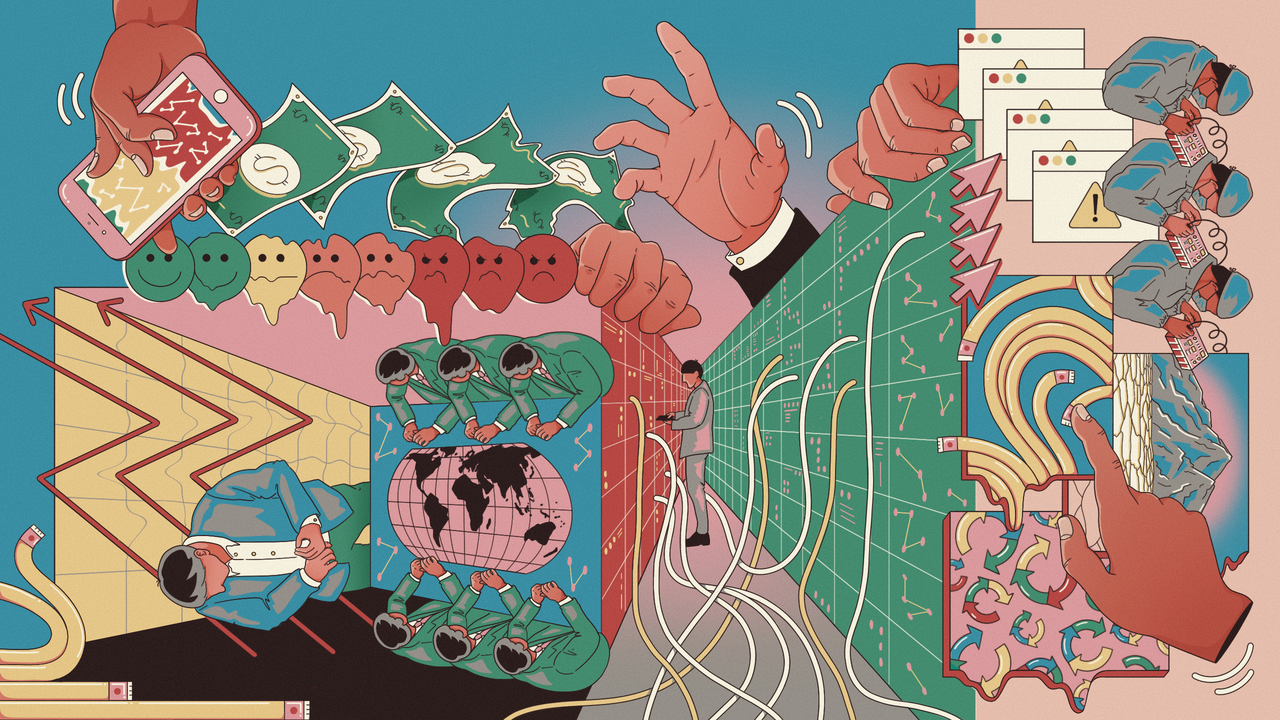
Image: Clarote & AI4Media / https://betterimagesofai.org / https://creativecommons.org/licenses/by/4.0/